Techniques, scar position, recovery and cost for a thigh lift after major weight loss, explained plainly before you commit.
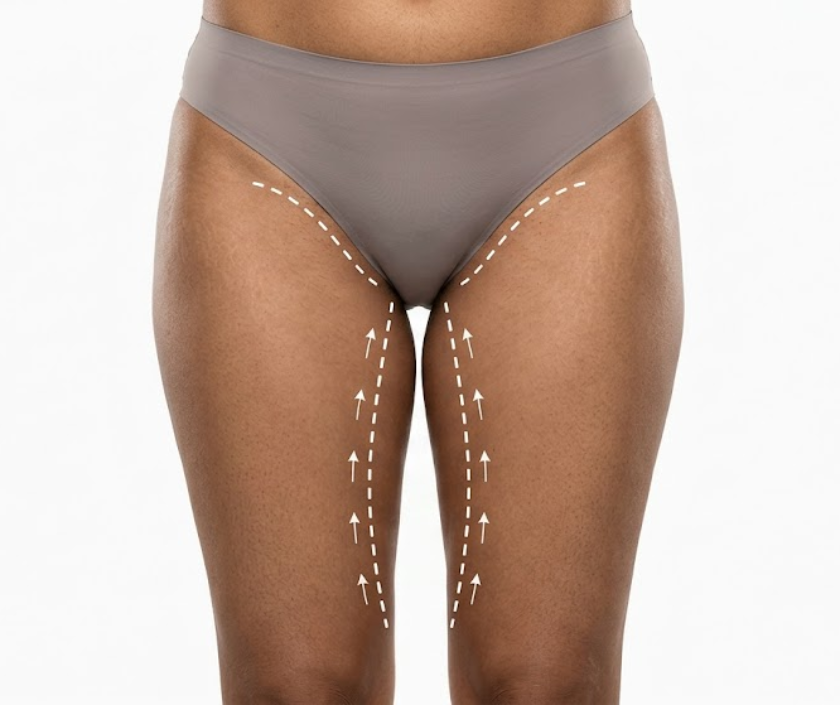
A thigh lift after weight loss removes loose inner thigh skin that rubs and chafes. The scar sits either in the groin crease alone or runs down the inner thigh when the looseness is heavy. Recovery takes six to eight weeks, and thighs are the slowest area of the body to settle.
Thighs are the area patients most often postpone and the area where the functional complaint is strongest. Chafing, rashes and skin that makes walking uncomfortable are why most people ask, not how the leg looks in a photograph. This page covers which of the five techniques suits which pattern, where each scar sits, and why thigh recovery is genuinely harder than the abdomen.
Because the inner thigh carries some of the thinnest, most stretched skin on the body, and it has the least underlying structure to hold it up. Once the fat goes, that skin has nothing to drape over and it hangs inward.
Gravity keeps working on it. Unlike the arm, the thigh is loaded with every step, which is why the looseness tends to worsen rather than stabilise, and why the skin folds rub against each other constantly.
The result is chafing, moisture trapped in the fold, and recurrent rashes or fungal infection, which in Surat's humidity is a year-round problem rather than a summer one. The loose thigh skin and chafing page covers the symptoms and the day-to-day management.
A thigh lift removes a section of loose skin and soft tissue from the inner thigh and closes the remainder along a planned line. Where that line runs depends on how much skin there is and how far down the leg it extends.
It is done under general anaesthetic and typically takes two to three hours. Drains are commonly used, and most patients stay one night. Walking starts the same day, deliberately, because early movement lowers the clot risk.
There are two patterns, and which one you need is the main decision on this page.
Groin crease only. A horizontal thigh lift places the incision in the crease where the thigh meets the groin and lifts the skin upward and inward. The scar is discreet and largely hidden by underwear. It works when the looseness sits at the top of the thigh only.
Down the inner thigh. A vertical thighplasty adds a scar running down the inner leg, sometimes to the knee. It is needed when the looseness runs the whole length of the thigh, and a groin incision alone would simply pull skin from the lower leg upward without removing it.
Anyone with heavy full-length looseness who is promised a groin-crease-only scar should ask how the lower thigh will be treated. The honest answer is usually that it will not be, and a second operation follows.
| Technique | Best for | Scar |
|---|---|---|
| Medial thigh lift | Classic inner thigh looseness and chafing | Groin crease, sometimes extending down |
| Horizontal thigh lift | Looseness confined to the upper inner thigh | Groin crease only |
| Vertical thighplasty | Heavy looseness down the full length of the thigh | Groin crease plus a vertical inner thigh scar |
| Spiral thigh lift | Looseness wrapping around the leg, not only inward | Wraps around the upper thigh |
| Liposuction-assisted contouring | Fullness with skin that still has tone | Small entry points only |
The last row is the one that gets mixed up most often. Liposuction removes fat and leaves the skin where it is, so on a thigh that is genuinely hanging it makes the looseness worse rather than better.
Plan for more help at home than an abdominal operation needs, because the limitation is movement rather than pain. Our recovery guide covers what to arrange in advance.
The general risks of surgery apply, and four are specific to this area.
Wound healing problems. The groin is warm, moist and moves constantly, which makes it the least forgiving place on the body for a long incision. Small areas of delayed healing are common and usually settle with dressings.
Seroma. Fluid collecting under the skin, which is why drains are used and compression matters.
Scar migration. A groin scar can be pulled downward over time by the weight of the leg. Careful anchoring to the deeper tissue reduces it, and it is a known reason for revision.
Leg and ankle swelling. Lymphatic drainage from the leg passes through the operated area and takes months to reroute fully.
Smoking and uncorrected low protein after bariatric surgery both raise the healing risk meaningfully, which is why eligibility and preparation are settled before a date is given.
Usually yes, because the fold that traps moisture is what gets removed. Once the inner thighs no longer press against each other, the skin stays dry, and the rashes that kept coming back through every summer generally stop coming back.
That is the reason most patients give for having it done, and it is a fair one. It is also why a thigh lift is worth considering even when the cosmetic result is not your priority, since the day-to-day difference in comfort and in what you can wear is immediate.
It is not a guarantee. If weight is regained the folds return, and skin that has been repeatedly infected can stay sensitive for a while afterwards. The skin rashes and intertrigo page covers how to manage the area while you wait for surgery.
Once your weight has been stable for six to twelve months, your BMI sits roughly between 24 and 32, you do not smoke, and your bloods are corrected. Those four criteria are not optional, and thighs are the least forgiving area if any of them is missed.
Protein, iron, vitamin B12 and vitamin D deficiency are all common after bariatric surgery and all of them slow wound healing. They take two to three months to correct, so they need finding early rather than the week before surgery. The full checklist is on our eligibility and preparation page.
Yes, and it often is. Thighs are commonly done with a body lift, because the looseness frequently continues from the buttock and outer thigh rather than stopping at the inner leg. Combining an arm lift in the same anaesthetic is also reasonable where fitness allows, since it saves a separate recovery.
What decides it is your tolerance for a longer operation rather than convenience. Longer anaesthetics carry a higher clot risk, and that calculation is made individually rather than by request. Our staging guide explains how the sequence is planned.
Published ranges in India run from about Rs 70,000 to Rs 2,50,000. A vertical thighplasty sits towards the upper end because it is a longer operation removing far more tissue than a groin-crease lift, and combining with liposuction adds to it.
Our cost page sets out the ranges per procedure and how a staged plan spreads across 12 to 18 months, and the total body transformation programme shows how the stages are sequenced. Thighs are rarely stage one.
At consultation Dr Shah assesses how far down the leg the looseness runs, checks the skin quality, and tells you whether a groin crease scar alone will do the job or whether a vertical scar is needed. You get that answer before you commit, with the line marked on your own leg.
We would rather explain why a vertical scar gives a better shape and let you decide, than promise a hidden scar and leave the lower thigh untreated. To discuss your own case, contact the clinic in Adajan or Vesu. For a neutral view of how this surgery is assessed in a public system, the NHS Wythenshawe body contouring service sets out the weight stability it expects before accepting a referral.
Medial thigh lift in Surat firms loose skin on the inner thigh after weight loss.
View details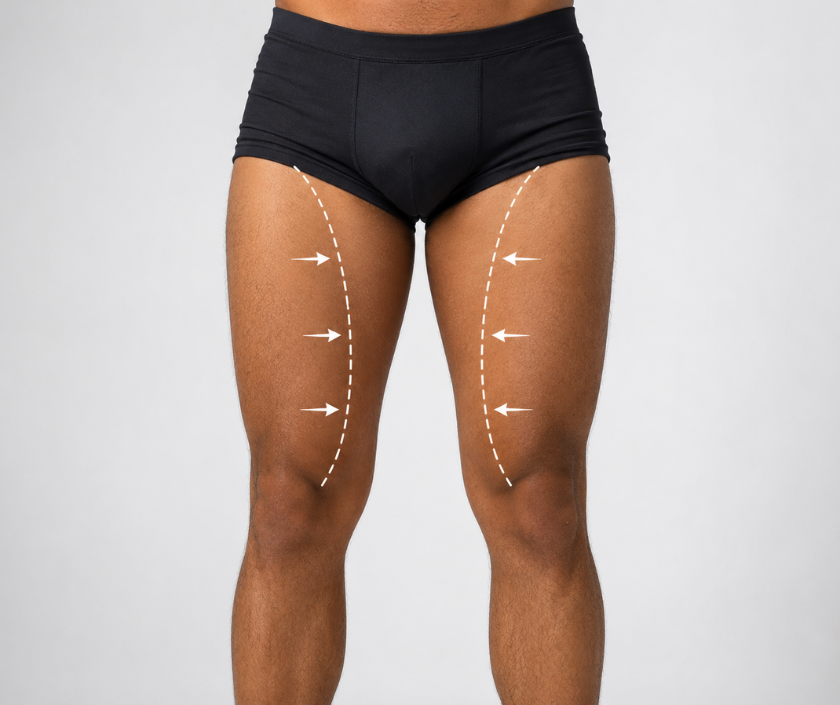
Vertical thighplasty in Surat treats heavy thigh looseness down the length of the leg.
View details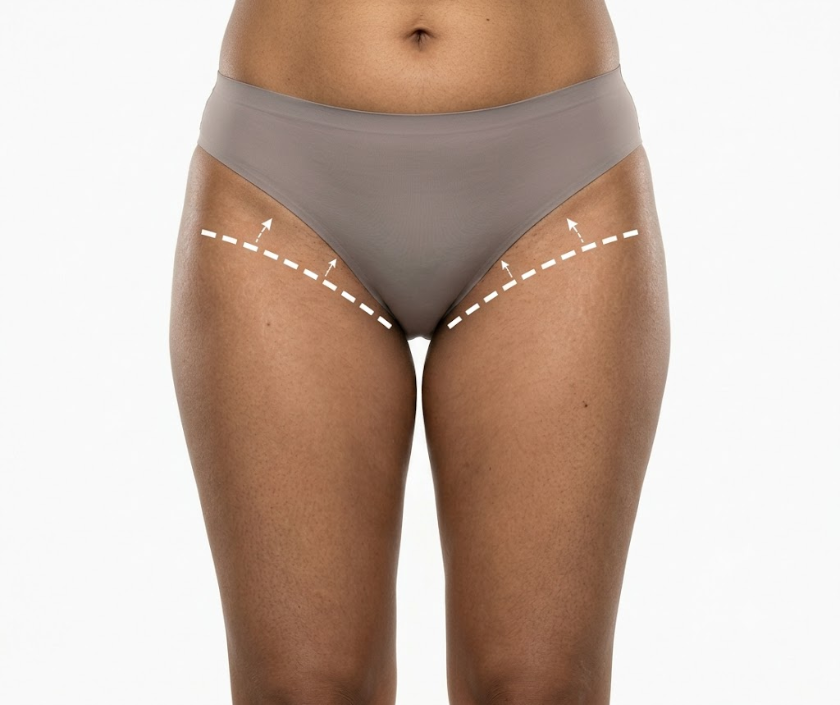
Horizontal thigh lift in Surat firms the upper inner thigh with a hidden groin scar.
View details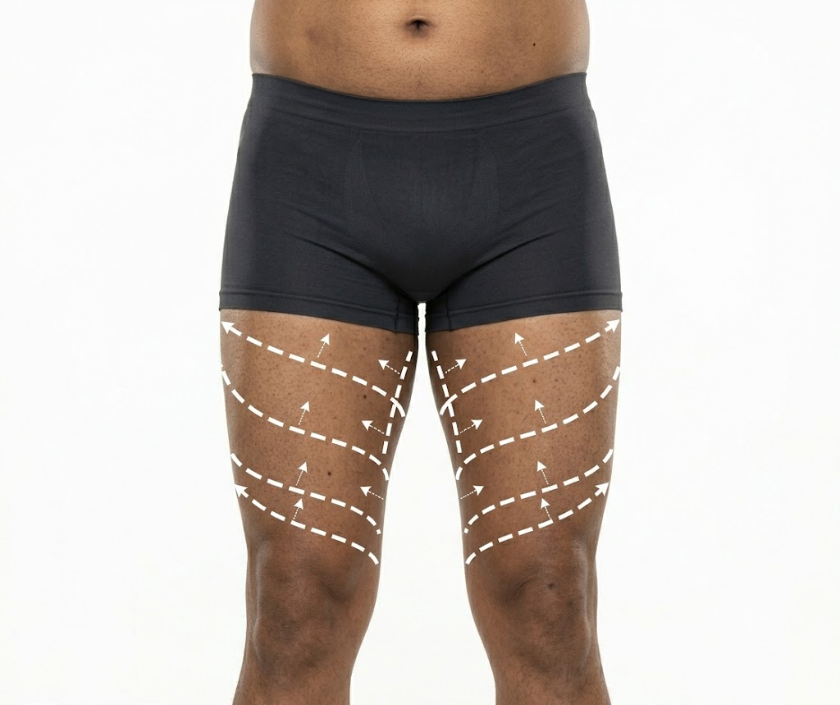
Spiral and combination thigh lift in Surat reshapes the thigh from multiple directions.
View details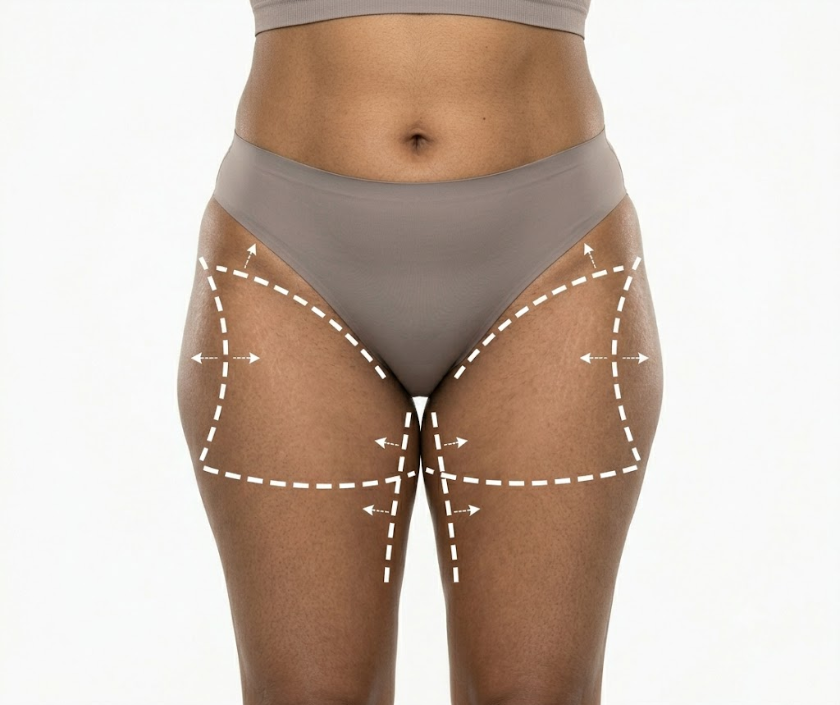
Liposuction assisted thigh contouring in Surat refines fuller thighs with firm skin.
View detailsHonest answers about this procedure in Surat.
Ask a QuestionSpeak with Dr. Ashutosh Shah at Elegance Clinic, Surat.
