Techniques, scars, recovery and cost for a tummy tuck after major weight loss, explained plainly before you commit to a date.
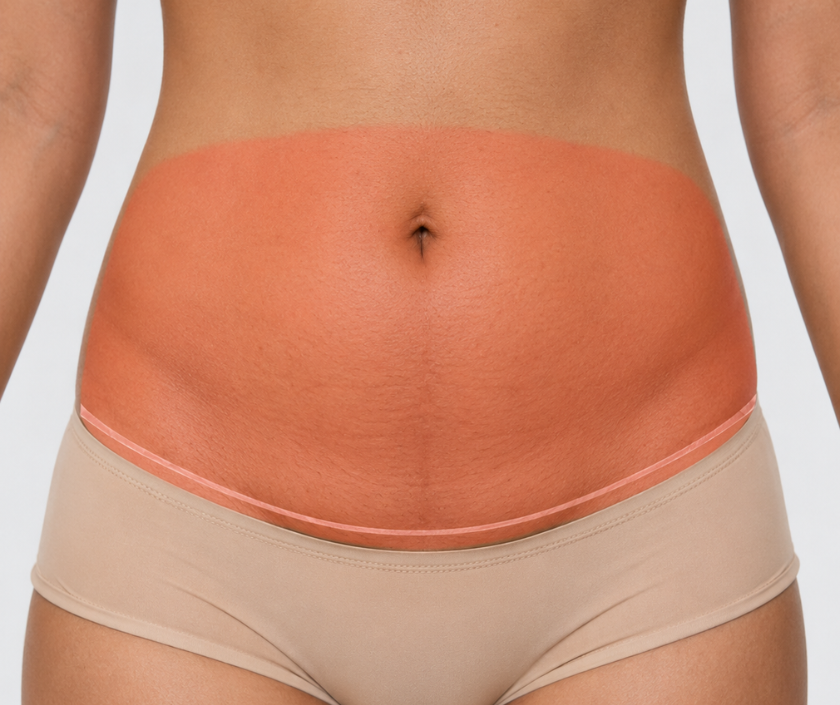
A tummy tuck after weight loss removes far more skin than a cosmetic one, and it often needs a vertical scar up the midline as well as the horizontal hip-to-hip scar. Recovery runs six to eight weeks, and wound healing risk is higher because the tissue has been stretched and nutrition is often depleted.
If you have read about tummy tucks generally, most of what you found described a cosmetic operation on someone who never carried a large amount of weight. That is a different procedure from the one discussed here. This page covers what changes after major weight loss, which technique suits which pattern of looseness, where the scars actually sit, and what recovery looks like week by week.
The apron, called a pannus, is the fold of loose skin and soft tissue that hangs over the lower abdomen after significant weight loss. It stays because skin that has been stretched for years loses the elastic fibres that would otherwise let it shrink back.
Exercise cannot fix it, and that is not a failure of effort. Training builds the muscle underneath and can reduce remaining fat, but there is no exercise that removes a layer of skin. Once the elastic recoil is gone, the only thing that removes the excess is surgery.
The pannus also causes real physical problems rather than only cosmetic ones. Trapped moisture in the fold leads to recurrent rashes and fungal infection, it interferes with hygiene, and at larger sizes it limits walking and exercise. Those functional consequences matter later on this page when we get to insurance. The hanging abdominal skin condition page covers the symptoms in more detail.
Four ways, and every one of them changes the operation.
More skin comes off. A cosmetic tummy tuck removes a strip below the navel. After major weight loss the excess is often several times that, and it extends above the navel as well as below it.
The looseness runs in two directions. A cosmetic case is usually loose vertically, so pulling downwards fixes it. After large weight loss the skin is frequently loose sideways too, and no amount of downward pull will tighten a horizontal excess. That is what drives the vertical scar discussed below.
Muscle separation is more common. Years of stretching often leaves the abdominal muscles parted down the midline, which no amount of tightening skin will correct on its own.
Healing risk is higher. Longer incisions, thinner blood supply at the wound edges, and the protein, iron and B12 deficiencies common after bariatric surgery all add up. This is why eligibility and preparation matter more here than in cosmetic surgery.
A panniculectomy removes the hanging apron and nothing else. It does not tighten the muscle, does not reposition the navel, and does not aim to contour the waist. It is a functional operation rather than an aesthetic one.
That distinction matters for two reasons. Medically, a panniculectomy is a shorter, lower-risk operation, which sometimes makes it the right choice for someone whose BMI is still high or whose health will not tolerate a longer anaesthetic. Financially, because it treats a documented medical problem, it is the one procedure in this category an insurer may consider, where a cosmetic tummy tuck will not be.
Full detail is on the pannus removal page.
Muscle repair, or rectus plication, is stitching the two vertical abdominal muscles back together down the midline after they have been pushed apart. The gap is called diastasis, and no amount of skin tightening closes it.
You may need it if your abdomen still bulges forward when you are otherwise slim, if you can feel a soft gap down the centre when you tense, or if the shape did not flatten despite reaching your target weight. It is checked on examination rather than guessed at.
Repair adds operating time and makes the first two weeks of recovery noticeably more uncomfortable, because it is the muscle wall that has been tightened rather than just the skin. It also produces a flatter, more stable result where it is genuinely needed. See muscle plication.
A fleur-de-lis adds a vertical incision up the midline to the standard horizontal one, making a shape roughly like an upside-down T. It exists because a horizontal excision alone cannot take up horizontal slack.
It is used when the skin is loose around the waist as well as up and down, which is common after losing forty kilos or more. Trying to treat that pattern with a standard tummy tuck leaves obvious bunching at the sides, and the only way to fix it afterwards is the vertical scar you were trying to avoid.
So the trade is a longer scar for a genuinely flatter, narrower waist. Most patients who need one and understand why accept it readily. Patients who find out at the last minute, having read only about a low horizontal scar, feel misled, and that is why it is set out plainly here. See fleur-de-lis tummy tuck.
| Technique | Best for | Scar pattern |
|---|---|---|
| Standard abdominoplasty | Loose skin mainly below the navel | Horizontal, hip to hip, low |
| Fleur-de-lis | Loose both vertically and horizontally, usually after very large loss | Horizontal plus a vertical midline scar |
| Extended tummy tuck | Excess continuing round to the flanks | Horizontal, extending towards the back |
| Reverse tummy tuck | Looseness confined to the upper abdomen | Under the breast fold |
| Panniculectomy | Hanging apron causing rashes, infection or functional limits | Horizontal, no muscle work |
Two add-ons are often combined with these rather than chosen instead of them: hernia repair where one is found, and mons lift, which lifts the pubic area that frequently descends with the rest of the abdominal skin and is easy to overlook until it is the only part left hanging.
The main scar runs low and horizontally across the lower abdomen, positioned to sit below a normal underwear or swimwear line. Where a vertical scar is needed it runs up the midline, and it does not hide the same way.
All of these scars are permanent. They fade substantially over about twelve months, going from raised and pink to flat and pale, but they do not disappear. Anyone promising otherwise is selling something.
The navel is repositioned in most full tummy tucks, which leaves a small scar around it. See umbilical reconstruction for why that is sometimes a procedure in its own right after major weight loss.
Compression garments are worn for several weeks throughout, and physical jobs need longer off than desk jobs.
The general risks of surgery apply, but three are meaningfully higher in post-weight-loss patients.
Wound healing problems. Longer incisions under more tension, on tissue with a poorer blood supply. Small areas of delayed healing along the scar are the most common complication, and they are considerably more likely in smokers and in anyone with uncorrected low protein.
Seroma. Fluid collecting under the skin flap, which is why drains are used and why compression matters. Larger excisions mean a larger raw surface and a higher chance of it.
Blood clots. Longer operations and reduced early mobility raise the risk, which is why you are walked on the day of surgery rather than left resting.
None of this is a reason to avoid the operation. It is a reason to prepare properly, stop smoking, correct your bloods, and have it done somewhere with a certified theatre and proper monitoring.
Published ranges in India run from about Rs 1,00,000 to Rs 2,50,000, and post-weight-loss cases sit towards the upper end because they are longer and remove more tissue. A fleur-de-lis or a case with muscle repair and hernia repair costs more than a straightforward one.
Most patients are planning more than one operation, and the abdomen is usually stage one. Our cost page sets out the ranges per procedure and how a staged plan spreads across 12 to 18 months, and the total body transformation programme shows how the stages are sequenced.
If the looseness continues round to the back and buttocks rather than stopping at the flanks, the right operation may be a body lift rather than a tummy tuck, and that is a different conversation about cost and recovery.
At consultation Dr Shah examines the pattern of looseness, checks for muscle separation and hernia, and tells you which technique fits, including whether a vertical scar is likely. You get that answer before you commit, not on the day.
We would rather explain the trade-off between scar length and final shape properly and have you decide, than promise the shortest possible scar and deliver a bunched waist. To discuss your own case, contact the clinic in Adajan or Vesu. The NHS overview of tummy tuck surgery is a neutral summary of the procedure and its risks.
Standard abdominoplasty in Surat to remove lower belly skin and flatten the tummy.
View details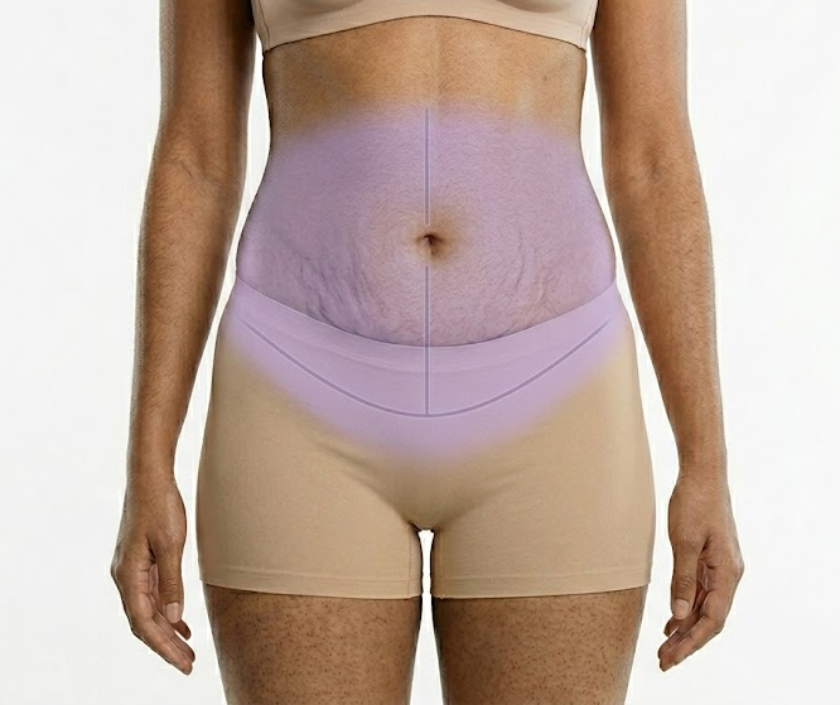
Fleur de lis tummy tuck in Surat removes skin both vertically and horizontally.
View details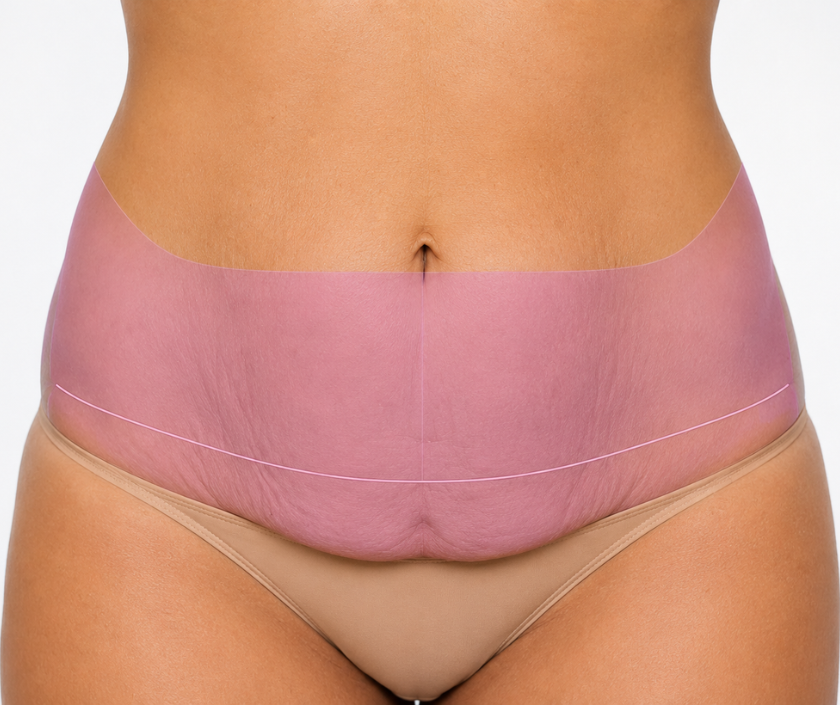
Extended tummy tuck in Surat reaches the flanks and hips for a fuller result.
View details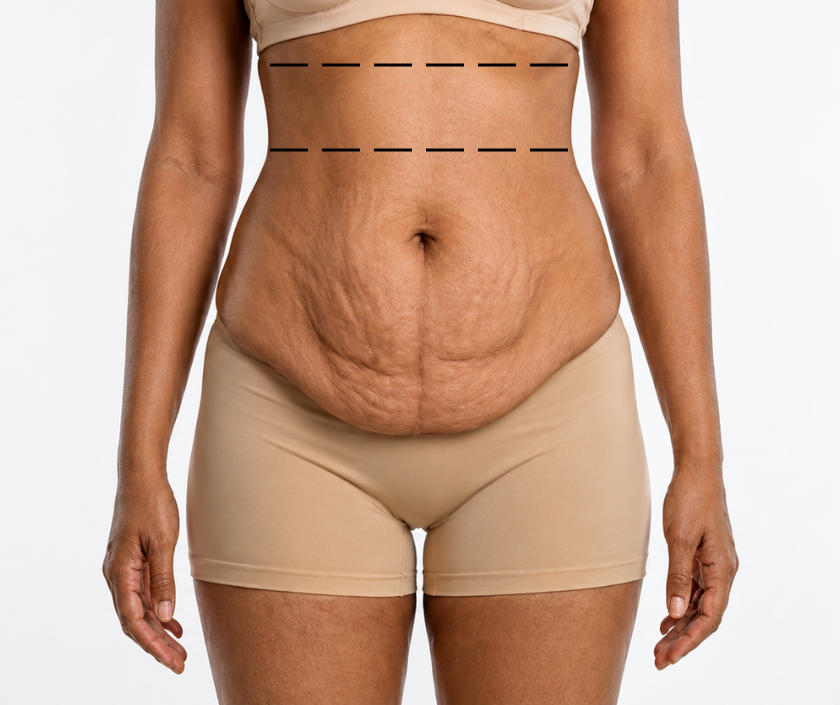
Reverse tummy tuck in Surat targets loose skin in the upper abdomen.
View details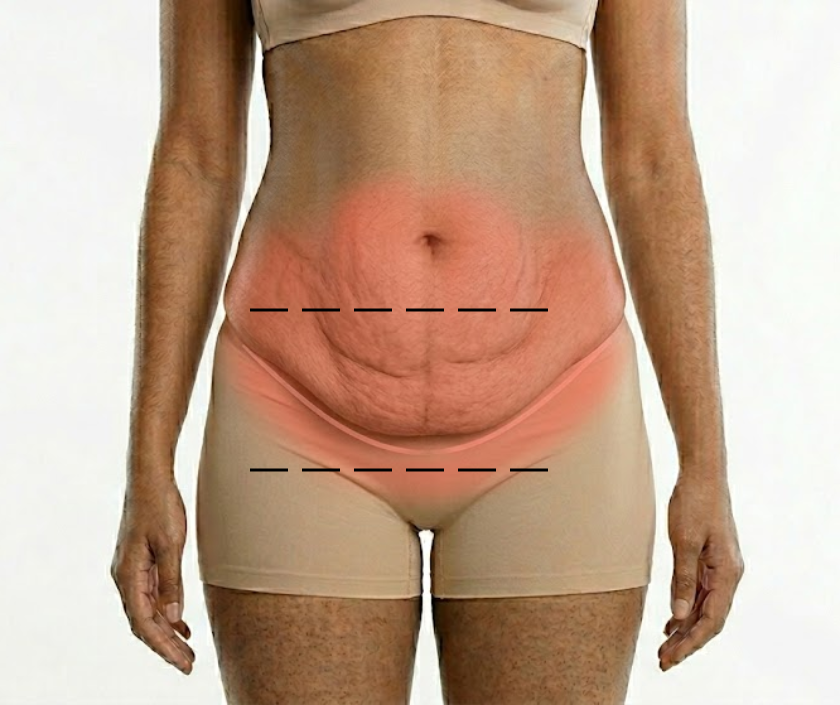
Panniculectomy in Surat removes the hanging apron of skin after weight loss.
View details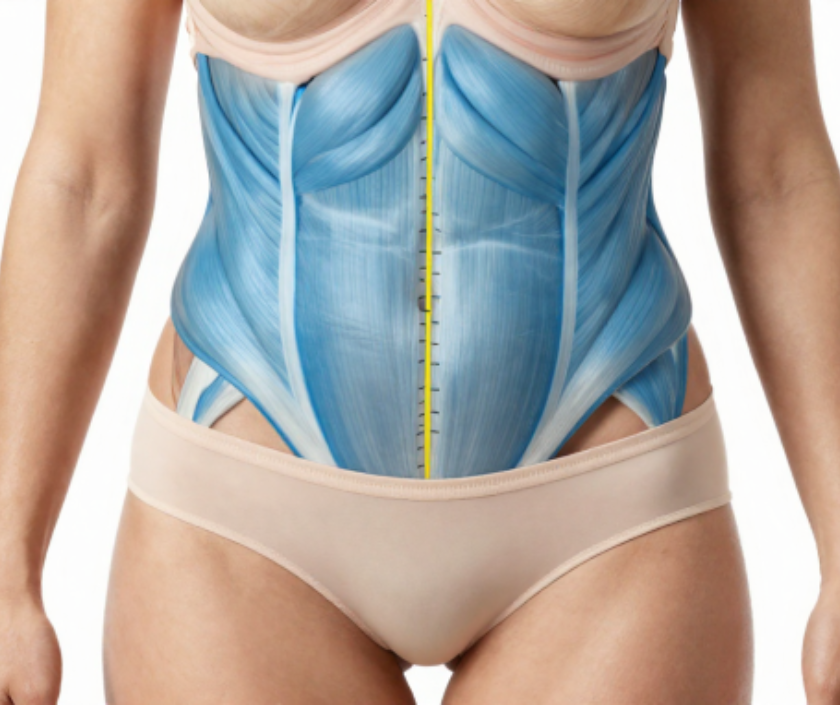
Muscle plication in Surat repairs separated abdominal muscles for a firmer core.
View details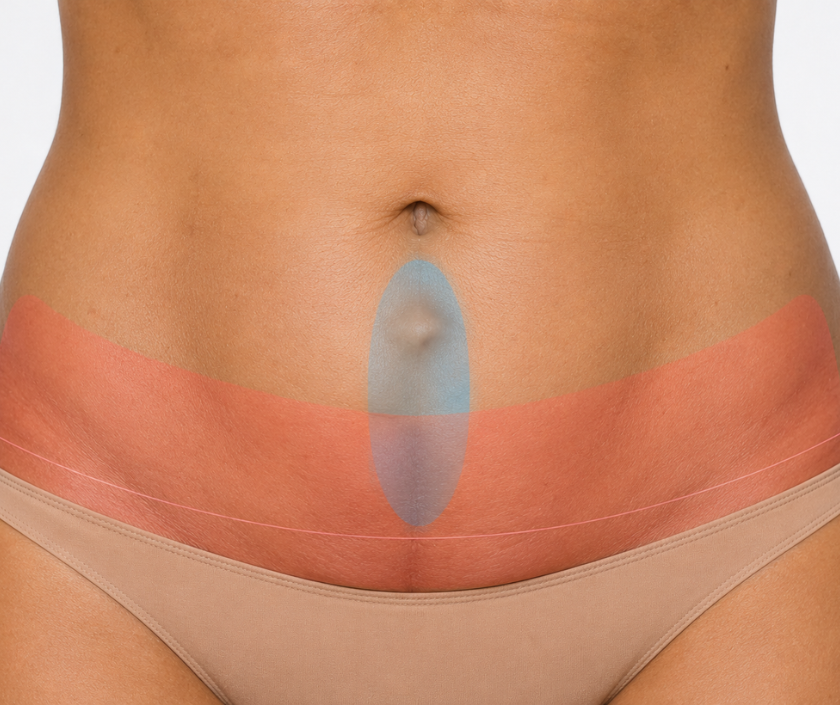
Hernia repair with tummy tuck in Surat fixes a hernia and reshapes the tummy together.
View details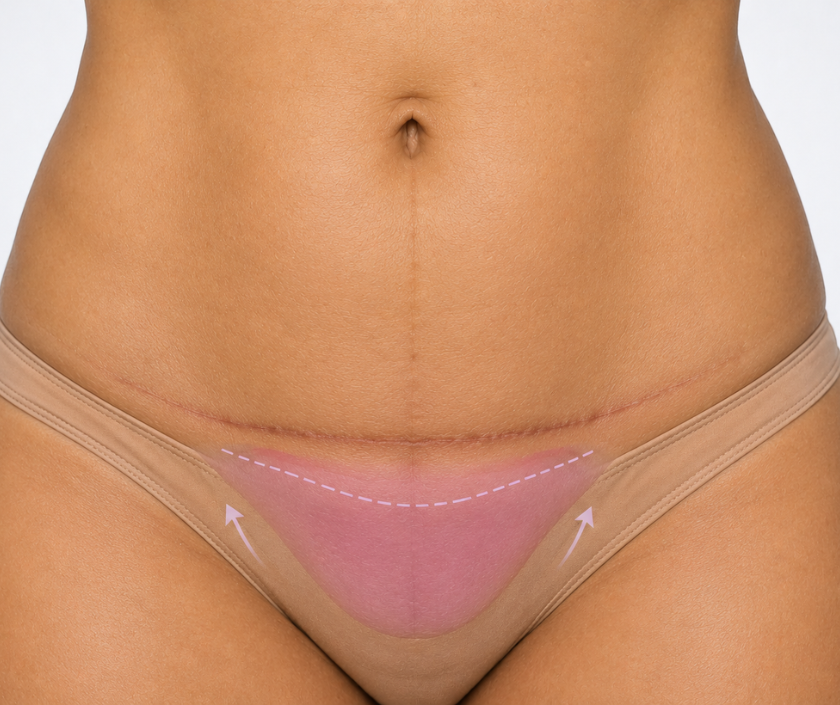
Mons lift in Surat lifts and refines the pubic area after weight loss.
View details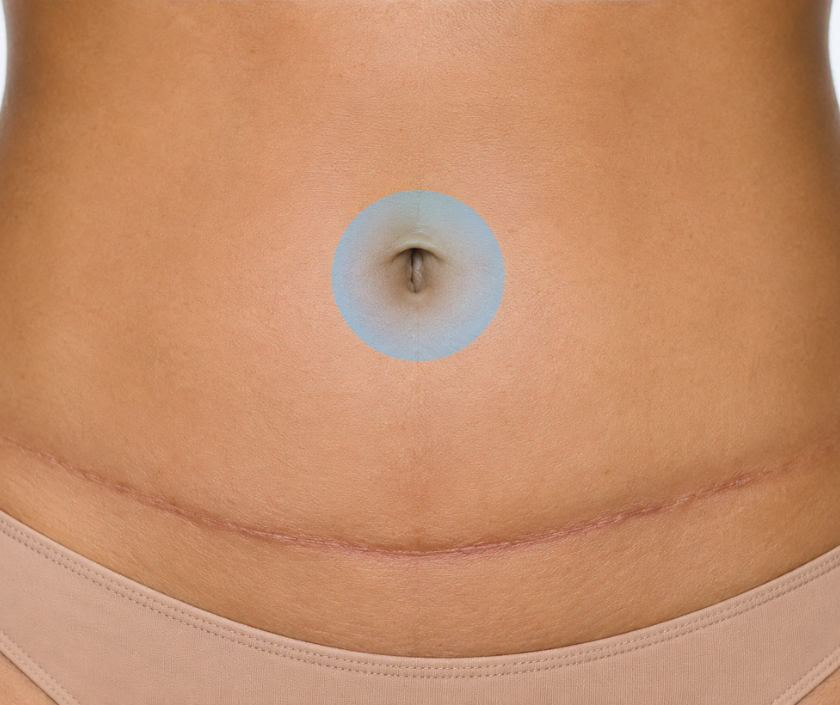
Umbilical reconstruction in Surat creates a natural, well shaped belly button.
View detailsHonest answers about this procedure in Surat.
Ask a QuestionSpeak with Dr. Ashutosh Shah at Elegance Clinic, Surat.
